High-pressure washers, trailers and skid units,what you also need to know when purchasing.
Under EU Directive 2014/68/EU (Annex II, Table 5), equipment for steam or superheated water (> 110 °C) only falls into mandatory PED Category IV when three conditions are met simultaneously: temperature above 110 °C, pressure above 32 bar, and internal burner/heat exchanger water volume exceeding 2 litres (mandatory pre-commissioning KvI and periodic recertifications*). If the water volume remains 2 litres or less, the assembly falls — regardless of working pressure up to 500 bar — under Article 4(3) SEP (Sound Engineering Practice) and enjoys full statutory inspection exemption.
* Inspection intervals vary by member state and may also have specific statutory terms.
When does a pressure washer or high-pressure unit fall into a PED risk category?
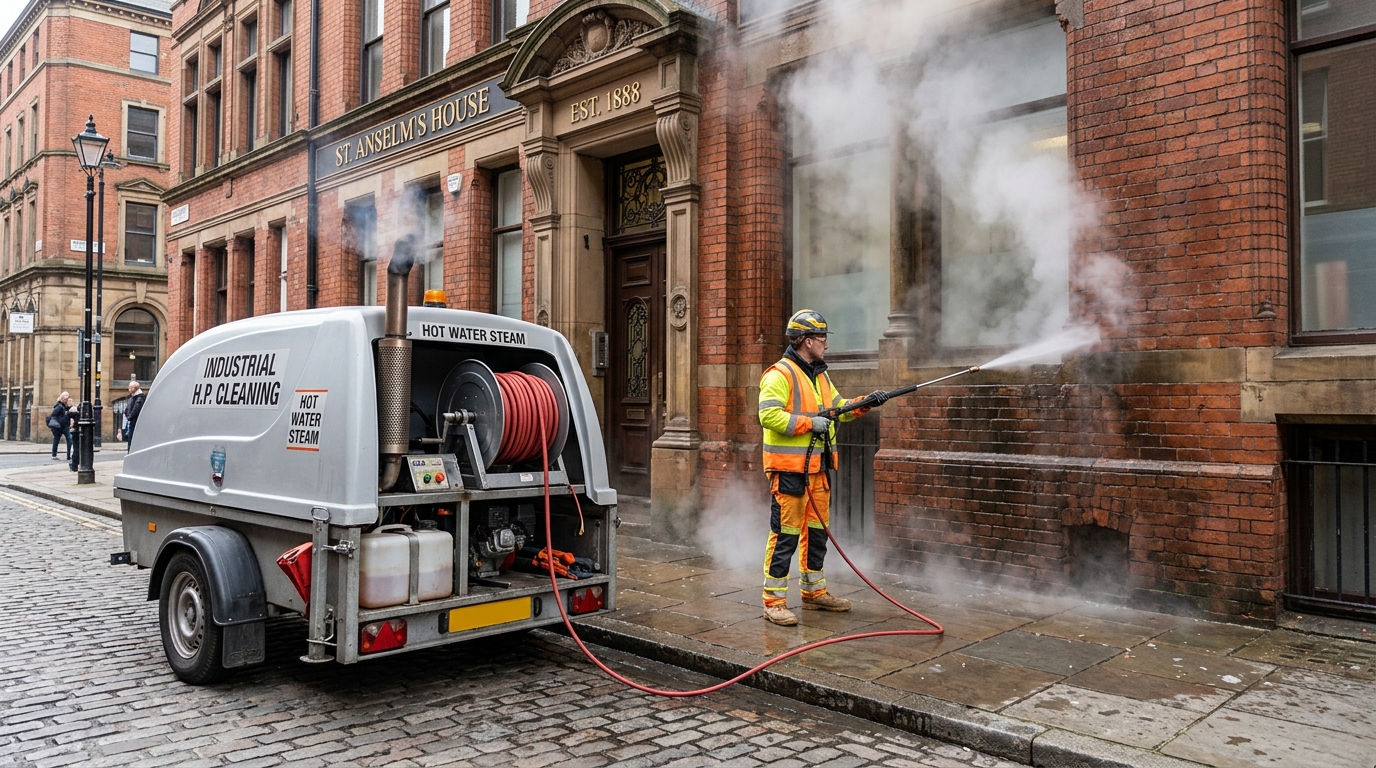
When purchasing a professional hot-water or steam pressure washer or high-pressure unit (for facade cleaning, chewing gum removal, weed control, or industrial cleaning), focus naturally centers on working pressure, engine type, and cleaning power.
What you must also know before buying: under EU Directive 2014/68/EU (Annex II, Table 5), equipment for steam or superheated water (> 110 °C) only falls into mandatory PED Category IV when three conditions are met simultaneously: temperature above 110 °C, pressure above 32 bar, and an internal burner/heat exchanger water volume exceeding 2 litres. In that case, pre-commissioning inspection by an accredited body and periodic recertifications* are legally mandatory.
If the water volume remains 2 litres or less, the assembly falls — regardless of working pressure up to 500 bar — under Article 4(3) SEP (Sound Engineering Practice) and enjoys full inspection exemption: 100% exempt from pre-commissioning examinations and periodic audits, zero downtime, and complete freedom to deploy universal certified hoses and lances.
* This interval may vary per country and may be subject to specific local licensing.
Labour inspectorates enforce in-service rules
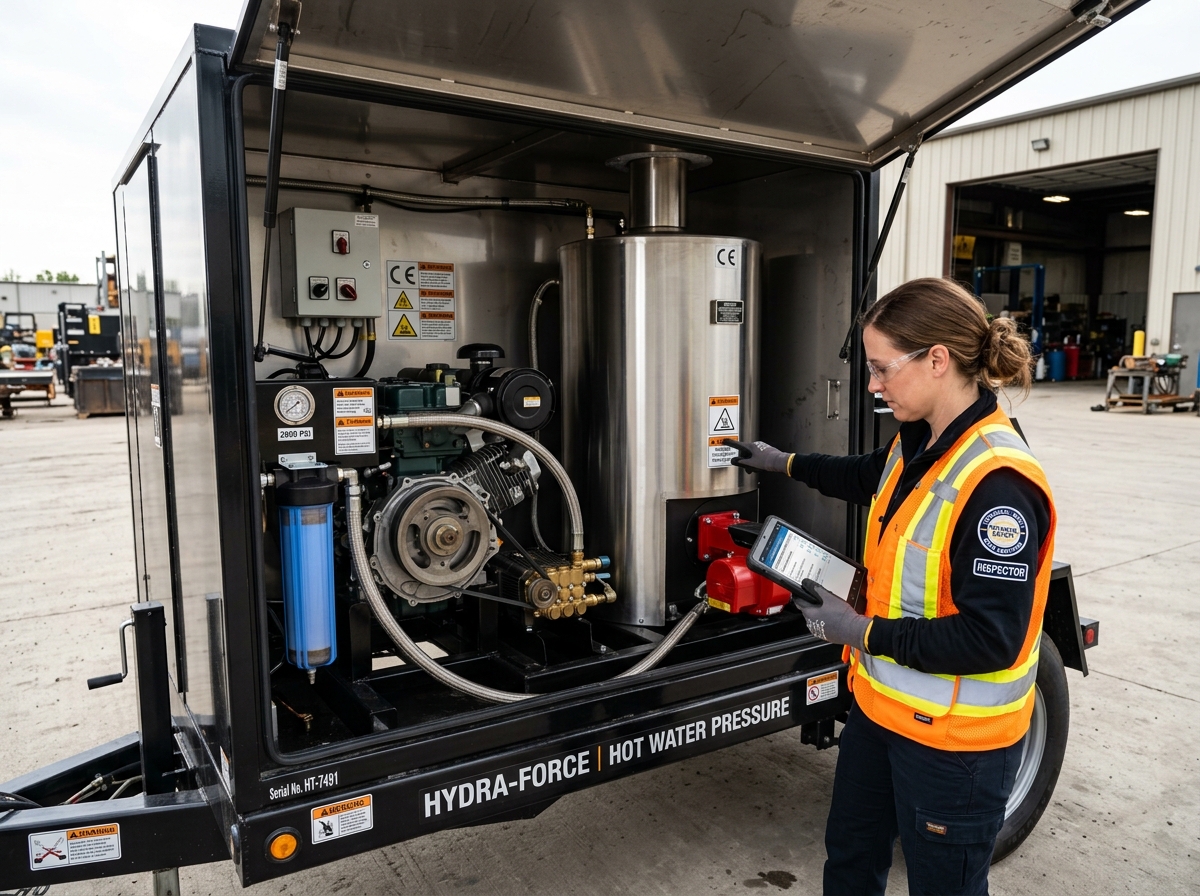
A CE mark covers only factory manufacturing. Once operational on European job sites, the employer bears strict liability for valid pre-commissioning certificates and periodic recertifications.
The 3 key questions for every buyer and user
Demand clear answers to these three legal and technical criteria before executing a purchase agreement for any pressure washer or high-pressure unit:
Pre-commissioning inspection
Is the proposed machine legally mandated to undergo formal on-site commissioning inspection by an accredited body before its first operational deployment?
Recurrent statutory audits
Does the equipment remain exempt from reinspections or are they mandatory, requiring you to factor in both the additional inspection costs and the inspection risk?
Component freedom & OEM lock-in
Are you permitted to use certified universal replacement parts, or does non-OEM hose/nozzle replacement legally invalidate the assembly certification and insurance cover?
If the water volume of the burner/heat exchanger remains 2 litres or less, the assembly falls — regardless of working pressure up to 500 bar — under Article 4(3) of Directive 2014/68/EU (SEP) and enjoys full statutory inspection exemption: zero commissioning audits, zero recertification shutdowns, and no vendor lock-in.
How to inspect your equipment nameplate in 30 seconds
CE mark + 4-digit NoBo number
If the data plate displays “CE 0036” (TÜV), “CE 0029” (Apragaz), or “CE 0620” (Kiwa), the unit is certified as a Category IV assembly. You MUST possess a valid on-site commissioning report and arrange periodic recertifications.
Generic CE alone (> 2L coil)
If the pressure washer has a burner/heat exchanger volume exceeding 2 litres at a temperature above 110 °C and an operating pressure above 32 bar, but only displays a generic CE mark with no 4-digit number, the manufacturer has failed to certify the complete assembly under PED. Operating this machine constitutes an immediate breach of European law.
Burner volume ≤ 2L (SEP)
If the documentation confirms the burner/heat exchanger holds strictly 2 litres or less, the machine qualifies under Sound Engineering Practice. No NoBo number is affixed under PED because it is 100% exempt from commissioning and periodic audits!
When does a pressure washer fall into the "Very high risk" class, making commissioning inspection and periodic recertifications mandatory?
Why the physical water volume of the burner/heat exchanger determines whether your equipment is immediately deployable or whether your business is burdened with mandatory periodic inspection costs, team downtime, and strict brand lock-in.
Burner/heat exchanger above 2 litres
At a temperature above 110 °C and pressure above 32 bar. High internal volume stores critically hazardous potential thermal energy.
Burner/heat exchanger up to 2 litres
At a temperature above 110 °C and pressure above 32 bar. Under EU Directive 2014/68/EU (Annex II, Table 5): if the burner/heat exchanger water volume remains 2 litres or less, the assembly falls — regardless of working pressure up to 500 bar — under Article 4.3 SEP (Sound Engineering Practice) and enjoys full inspection exemption.
Is your machine subject to mandatory statutory audits?
Answer 3 short questions about your pressure washer, high-pressure unit, or skid and immediately learn more about the legal frameworks.
What are the design pressure (PS) and operating temperature (TS) of your equipment?
Under EU Directive 2014/68/EU (Annex II, Table 5), equipment for steam or superheated water (> 110 °C) only falls into mandatory PED Category IV when three conditions are met simultaneously: temperature above 110 °C, pressure above 32 bar, and an internal burner/heat exchanger water volume exceeding 2 litres. If the water volume remains 2 litres or less, the assembly falls — regardless of working pressure up to 500 bar — under Article 4(3) SEP (Sound Engineering Practice) and enjoys full inspection exemption.
PS (e.g. 200 bar) and maximum design temperature TS (e.g. 150 °C).Essential knowledge & calculation models
Immediate access to physical threshold physics, the interactive 10-year TCO calculator, and the full downloadable audit checklist.
Why 2 litres dictates the legal threshold
Compare System A (< 2L SEP) with System B (> 2L PED Category IV) regarding stored thermal energy and safety design.
TCO inspection cost calculator
Simulate the real lifecycle financial impact of pre-commissioning, biennial audits, downtime, and OEM parts over 2 to 10 years.
Procurement & audit checklist PDF
Use the comprehensive 10-point audit checklist to verify compliance before purchasing and during statutory field audits.
Frequently asked questions about PED 2014/68/EU
Authoritative answers to common questions regarding classification, the 2-litre threshold, downtime, and employer liability.
The Pressure Equipment Directive (PED 2014/68/EU) harmonizes European legislation on the design, manufacture, and conformity assessment of pressure equipment and assemblies with a maximum allowable pressure greater than 0.5 bar. It applies to equipment placed on the European market, establishing safety categories from I to IV.
Under EU Directive 2014/68/EU (Annex II, Table 5), equipment for steam or superheated water (> 110 °C) only falls into mandatory PED Category IV when three conditions are met simultaneously: temperature above 110 °C, pressure above 32 bar, and internal burner/heat exchanger water volume exceeding 2 litres. If the water volume remains 2 litres or less, the assembly falls — regardless of working pressure up to 500 bar — under Article 4(3) SEP (Sound Engineering Practice) and enjoys full statutory inspection exemption.